-
Journey to (Un) Diagnosis
(This is dedicated to those of us who have struggled to find or are currently battling to discover a diagnosis that leads to healing…..)
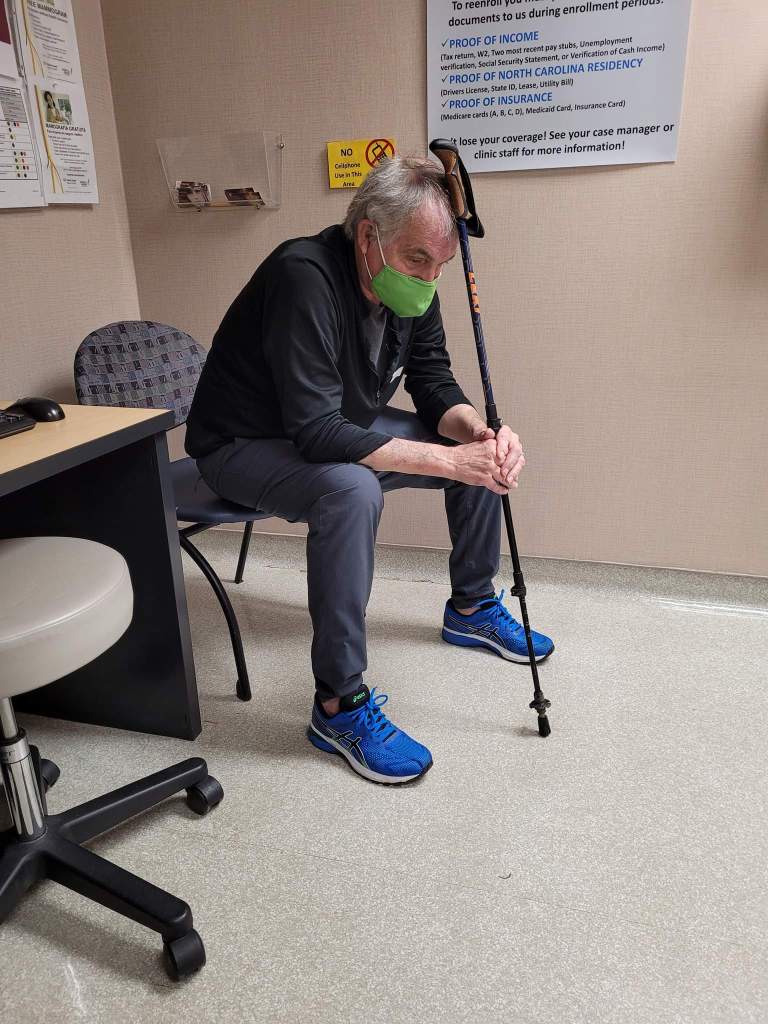
Since meeting a new group of friends during my thru-hike of the Appalachian Trail in 2011, the four of us have made a point of tackling new adventures together each year. I was talking to my hiking buddy from Charleston early in the summer of 2020. We decided to search for an “epic adventure”. Long distance hiking trails were not recommended because of COVID, so we had to look elsewhere. We finished a 50k the past December and the same sponsor organization enticed us with a 24 hour event: mile and half loops around a defunct golf course. We signed up because one of us said, “I’ll do it if you do.” So four of us were in, my buddy and two other hikers who were part of our “team.” We knew we might not be able to move fast, but history told us that we had slow and steady endurance on our sides as we committed to tackling this new adventure.
The race was scheduled for Sept. 18th. I’d trained all summer. By mid-August my training times had increased significantly. I would get out early trying to beat the summer heat. My last long run looked like this:
I’d been on the road for a couple of hours. It was almost time to head into the sunrise. I’d been out since 4 am weaving my way through the main streets of my small town. I wore a headlamp although I felt secure with little traffic, lampposts and sidewalks. I basically followed a “T” shaped path through town, many times over, with little variance because the town is that small. I had run over ten miles before the sun appeared. Despite my headlamp, I don’t leave the safety of town before heading into the surrounding darkness, with no street lights and drivers not expecting a small light bouncing on the side of the road heading toward them.
It soon becomes time to head out and the new scenery breaks up the monotony of the run. I run along Railroad Street and cross on a bridge over the highway: traffic light but whisking its way below me. I finally turn left into where I will face the sun, but early morning fog billowing off the river greets me. I part the fog with my orange shirt, still wearing my headlamp. It is not until the river pulls away from the road and drags the fog with it and the trees give way to farm land, that the beginnings of a new day appear. That pre-rise glow appeared over the hills, turning the trees orange. The farm animals grabbing the early morning warmth, while shaking off the damp early morning fog,
The view lifts me after the routine of town. I don’t look forward to the added warmth of the sun. i eventually turn back towards town. The next leg of my journey brings me back into town, out the opposite side where I will face hills but with lots of shade that will protect me from the uprising of the sun’s rays.
The return to town opens to expanses of farmland awakening, but raising my eyes towards the west, I take in some of the highest mountains in the eastern US. It is an expansive view and somewhere beyond the first range hides the highest peak in the east, Mt. Mitchell. I put in 28 miles that day, finish back in town in the heat with Becky bringing cold drinks to fuel the finish.
My training has gone well through the 28 miler; I had planned a 30 miler before the race but my back doesn’t hold up and I never do the 30. Somewhere along the way, I injured my back. I suspect it was from pouring concrete timbers, lifting and twisting buckets of concrete to complete a new shop on my property. I try to put in half the miles of my long run a day or two after. It doesn’t always work out. I know my body. I know what to run through and when to back off from training, but this time I go out anyway despite the warning signals.. A planned 14 mile run turns into 2 and a ½ mile journey due to multiple injuries. First I fight a calf pull; I imagine I can run through this, but I hobble quickly and struggle to the house with two calf pulls, two hamstring pulls and one quad pull. My training is done. In hindsight, I wonder if this is a precursor to what is to follow.
What follows is my journey to diagnosis and treatment. There are a few personal notes included. The little energy I had was focused on research and the development of the time-line that would help doctors help me.
Sept 18, 2020 Race Day I don’t know what to expect. I have basically given up on any training when I hobbled home with my multiple injuries. The course is a 1.5 mile loop through an abandoned golf course. It is a relatively flat course. With a climb to the finish, which even the strongest runners walk. The first lap is a discovery; Becky, my wife, travels with me. We mostly walk. Just before the climb at the finish, we dodge a runner from behind and Becky falls. She is injured. It turns out to be a break in her elbow. I toy with the idea of leaving and taking her to the hospital. But my sister is on the way and I start the next lap and I just keep going, with little stopping. A little over 12 hours and 41 miles of a 24 hours race, I decided to call it and get Becky home to a comfortable setting and her own bed. An ultra runner told me that running an ultra 97% mental and after a pause “the other 3% is also mental”. This holds true for me during this race.
October 6, 2020 Very limited running and strange sensations when I move leads me to the doctor and a recommendation for an MRI. Each movement, whether coming to a standing position or moving an inch while prone, brings an increasing pain through my body for ten seconds. The MRI shows SI damage. It takes a month to get into the pain clinic and another month to get the steroid shot. It is here that I begin to be proactive and I find another doctor who can administer the shots two weeks sooner in mid December. My body has been swelling and pain is creeping from whatever is happening to me. It is very difficult to determine the difference between my back problem and the other problems I am having.
October 28, 2020 and I am headed to urgent care after running a low grade fever and dealing with a dry cough for 6 weeks, beginning just after the race. Tylenol would take care of the fever but it would usually return after the tylenol wore off. I would usually run/walk two or three miles when the fever subsided. A Covid test was ordered, I guess out of caution because the PA agreed with me; the symptoms had been with me so long. It was negative as were the approximately ten future Covid tests. A chest x-ray was ordered. I agreed to the test despite having no chest discomfort. No issues were discovered with the x-ray. I was prescribed antihistamines.
Oct. 30, 2020 The x-ray impressions read, “No evidence of cardiac or pulmonary disease. Heart size and pulmonary vascularity are within normal limits. The bony thorax is intact.”
Nov. 13, 2020 Cough continued with no improvement with the antihistamines. Low grade fever and fatigue present as well. Another visit to urgent care and symptoms remain the same. Possible eosinophilic esophagitis. Possible referral to GI and Pulmonary. Blood panels ordered. Continued use of Prilosec.
Nov. 20, 2020 Blood panels taken earlier in the week are askew. Unfortunately, I have some good days and my family doctor thinks I am over whatever has been ailing me. She explains the blood work as being out of sorts because of the viral infection I have been suffering through. We blow off further referrals. My new found wellness is short lived. My fever and fatigue return soon along with new symptoms.
Dec 4, 2020 My new symptoms are noticed by Becky as we are walking around town putting on a 5K with the kids and grandchildren on Thanksgiving Day. We are raising money for the Alzheimer Association in honor of my dad who passed away in August. Near the end of the walk, Becky notes that my legs appear swollen. My first thought was because of afib that I might have a blood clot. I touch base with my cardiologist and we both suspect that it is not a clot, since the swelling is not localized and in both legs. The Echo is ordered, just in case but found to be unremarkable. At this point, I notice no muscle weakness or pain. An echocardiogram is ordered. PCP ordered Levaguin.
December 2020 and I have made the decision to finally have an ablation. In my mind was a 10 year anniversary hike of the Appalachian Trail; I want to do it again. The decreased time between afib episodes would definitely get in the way. An EKG was ordered and returned unremarkable.
December 11th–Message to PCP concerning swollen lymph nodes under arm, fever and leg and ankle swelling. Legs are sore to touch. Lab Work ordered
December 15th-PCP ordered a second round of Levaquin and suspected swelling was related to kidney function issues found in bloodwork and infection was causing fatigue and muscle pain. During this time, I received steroid shots for my back pain. Noted some improvement in the back.
December 28th–Saw PA at Internal Med office due to the fact that PCP was out of office. Major symptoms of concern at that time were anemia ( suspected GI Issues) and fatigue (ordered stress test to rule out cardiac issues.) Swelling continued especially in lower extremities.
January 4th–Virtual visit with GI. Scheduled endoscope and colonoscopy to rule out GI issues causing bleeding. Voiced concerns about low protein and albumin levels.
January 11th—Follow up with PA. Lab Work continues to show anemia, low protein and albumin, high platelet count and other abnormalities. Symptoms continue with edema around the midsection and in arms. Fatigue continued to be debilitating. Chronic cough continues.
January 12th completed a stress test with no issues, although it was difficult because my legs barely function.
January 13th— Chest x ray ordered showing possible pneumonia. Ceftin and Doxycycline prescribed.
January 21st–Endoscope and Colonoscopy performed. Esophagus stretched to correct dysphagia and tissue samples taken. Prescribed Priloec for GERD. Tissue samples showed infection in the esophagus.
January 25th– Visit with PCP. Symptoms: persistent cough that is productive, low-grade fevers daily, severe fatigue, swelling all over body, muscle pain and soreness and well as joint pain all of which has worsened over the last month and continues to progress. Began taking Iron due to anemia. Referral made to Infectious Disease and Pulmonology.
January 28th–Saw Infectious Disease Doctor who reported symptoms of chronic cough, anemia, lung infiltrate and leg pain. (My swelling was still present and fatigue was debilitating.) Ordered chest CT and taking Nyquil Severe Cold and Flu and a variety of blood work.
February 3rd— Pulmonologist. Lung nodule seen on CT not present on previous xrays. Seemed unconcerned. Couldn’t explain the cough. Ordered sputum cultures. Follow up in 6 months.
February 4th – Visited ER on advice of Infectious Disease Dr. Symptoms were highly present-Swelling, fever, muscle pain, cough Prescribed Levaquin. This didn’t change my fever or cough.
February 8th–Saw Infectious Disease Dr. He stated that blood work, not sputum samples, showed Pertussis. Ordered lab work for possible fungal infections as well stool samples looking for parasites.
February 11th- PCP suspected allergy to Xarelto. Switched to Eliquis and began a taper dose of Prednisone–40mg-10mg. Fatigue and swelling decreased slightly, fever dropped, cough continues and muscle pain is worse and occurring in new places like wrists. Muscle atrophy is very noticeable. On taper to 10 mg, most symptoms began to worsen. PCP ordered 20 mg daily. PCP said that Pertussis was not a correct diagnosis as I recently had a whooping cough vaccine, thus the antibodies picked up in the blood work. She referred me to the infectious disease department at Baptist Hospital.
March 2 – Visit with Baptist infectious disease department. With lab work completed, the doctor suspected an autoimmune disease and referred to rheumatologist and allergist.
March 5– Dr. Z (my rheumatologist) suspected Polymyositis. Becky through her research had come to the same conclusion the night before. Doctor Z noted weakness and swelling. She was concerned of possible cancer. She increased prednisone to 60mg. As we were driving home, about 30 minutes from the office we had a call to return and have an EMG conducted. No significant neurological conditions were found.
March 11 Consult with Allergist determined that I needed different treatment than he was able to supply.
March 21, 2021 Today is a dark day. My muscles have atrophied, my body is swollen, movement restricted and it is difficult sitting and standing. I have nothing on my calendar to look forward to. All I see ahead is more pain and despair. The waiting and the unknown bury me in hopelessness.
March 23- Muscle biopsy conducted
April 2- Dr Z still doesn’t have biopsy results. Started methotrexate, folic acid and Fosomax. Began tapering of prednisone. Referral to neurologist and physical therapist.
April 14– Dr. Z confirmed dermatomyosits based on muscle biopsy.. Symptoms have increased since last visit. Increased prednisone from 30 to 40 mg. Referred for lung nodule and extensive GI exam to rule out cancer.
Other things that I have noticed since this began:
I often have flushing, especially after eating.
I can only sleep on my back. Pain in the rib cage/abdominal area prevents side sleeping.
Some days, the muscles in my thighs literally harden and increase in stiffness.
My muscles feel weaker with decrease in swelling. Pain isn’t the debilitator: my muscles are.
April 29– First infusion
May 7 – Dr. Auchobon, a neurologist performed another EMG and reported a normal finding. Inflammation in blood work created a concern of peripheral vasculitis. (A future referral to a dermatologist and a skin biopsy disproved this. Dermatologist found a rash on my scalp and treated me with shampoo. I did have a future follow-up also with a hematologist, but there were no blood issues found.)
May 27– Second EMG- Same results- Note that I can use a walker now instead of a wheelchair.
January 24, 2023– After 20+ infusions, I can sit, stand, shower and walk on my own. I can hike. I look forward to each day. It does aggravate me that one of my legs is still largely numb. I am baffled that my right quads don’t seem to respond to exercise and measure nearly two smaller than my left. I still have balance issues but I am beginning to run again, slowly and with a limp.
Again, there are very few personal notes in this timeline, because it wasn’t my focus. Next week, I head for my 24th infusion. I have been told by my rheumatologist that this is in all likelihood a lifelong thing. I really don’t mind; it is part of my life now and the alternative is not a pretty picture. I have left the wheelchair behind, as well as the walker and crutches. I no longer need a raised toilet seat or fear the six inch lift heading into the shower, nor hate the feel of the water pouring on my skin through the shower head.
I don’t spend a lot of time dwelling on who I used to be. I get up every morning and try to learn what I can not do but more importantly what I can do. This year, I will go on bike trips, run (a generous verb given how the disease has left me) a half-marathon and hike again on the AT. Most importantly, I will plan another year to be around with family and friends.
-
Effortless

I used to joke that the difference between a six minute mile and ten minute mile was thirty years. In my thirties I regularly ran anywhere from a 5k to a half marathon in the 6 minute/mile range; I was still doing 8 minute/mile 10k’s in my late fifties and in my late sixties,half-marathons in the ten minute range. Then I got sick to the point where I ended up in a wheelchair. I lost all muscle use in my legs. With treatment I began to improve and learned to walk again. I still don’t know if what I now experience are the aches and pains of aging or what is to be expected based on my disease.
I do know, I hurt. I do know I wish people knew who I was before. My mom used to tell Becky that she wished she knew her before when she aged and found it difficult to move around.. I understand, I do wish I could still be seen pre disease, as someone vibrant, someone who could complete ultra marathons and long distance hikes.
As I begin to look normal, with no notable limp, and no accouterments; I have left behind my wheelchairs, my walker, my crutches and most days even my hiking pole. Now I face the opposite from people who know me. There is an expectation that I am more than I am, that I am the guy who ran all those races and climbed all those mountains. Now that I walk normally, people don’t realize I am climbing a different mountain, one very real physically, but also very real mentally. Unless you watched me tackle a technical down or descend a set of stairs, which is achieved only with difficulty, there is no reason to believe I still have hills to climb on the way to recovery.
Every step I take hurts. My foot hurts, my knee hurts, my hips hurt and my back hurts in many places. But I still move; I know in the long run it is still very likely good for me and I simply like the act of moving. No one helps me in this journey; most of the medical profession proved clueless in diagnosing my disease and none understand the recovery process. I only complain to Becky and I look normal so I should be that pre-disease guy that everyone seems to see.
I dreamed of running again, not in the sense of sitting around thinking about running through a field of flowers but at night, as I slept. Seven different times! I don’t remember the details but I did remember at the end of the dream I would say that this is real. I’m not dreaming I worked my way up to walking 12 miles in just under 18 minutes per mile, but I couldn’t run. I would try, but Becky would tell me, as she watched me labor in the effort, that I didn’t have the necessary lift. My right leg just wouldn’t cooperate as much of it suffered from neuropathy. My right upper leg measured 2 inches smaller in the quad region and my knee felt it lacked any support, so I never really thought that I would run again and it really never concerned me. I was happy to be walking.
But then Prince Edward Island happened. Becky and I traveled to Canada with the intent of doing the 420 mile Island Walk. Our traveling partners brought along bikes and rode many of the miles we walked. Eventually we found a guy from Houston who moved to the island, bought an old church and rehabbed old bikes. We bought a couple for 100 Canadian dollars and rode many of the remaining miles until Hurricane Fiona chased us away. I learned something on the bike. While I was capable of riding a pretty clip when the path was relatively flat, I really struggled on the long uphills, unable to keep up with the others. I simply lacked cardiovascular fitness. Because my body was limited speed wise, I could walk long distances but I was rarely able to tax my breathing or challenge my heart rate.
In Canada, I began to understand the quandary of not having the strength to develop cardiovascular fitness in the traditional way and when I arrived home, during one of my walks I tried again for the lift I needed to run, and discovered it was finally there. The bike riding developed just enough elevation in my legs that I could achieve some facsimile of a run.
So I began to run. It had to look awkward and entertaining, because it sure felt that way. I was probably running 30% of the time, avoiding the downhills and dips in the road and of course reverting to walking when cars drove by, not wanting to subject the driver to such a spectacle.
I signed up for the local turkey trot, only having made less than a handful attempts at running. There would be a small crowd and I had no idea if I would run. But of course I did; too self competitive not to. It was ugly but I finally cracked the 15 minute mark. I was pleased.
My son, Nicholas, ran with me. (Becky ran also.) We used to run together often before I became sick. During Thanksgiving dinner, Nick remarked that he was surprised to see he had reached some peak minutes as defined by Fitbit. I looked at mine and discovered I had 39 peak minutes during the run. He didn’t think this was possible, relying on his previous knowledge of me , pre-disease. As I shared the evidence with him, he said he had no idea I was in such bad shape. Nick remembers who I used to be. My physical appearance would generally indicate that I am again that person, and cause others, like my son, to forget the disease that wiped me out.
Now Becky and I are at Hilton Head, and she sometimes forgets as well because I look again like that guy in the photo who runs ultras.. It is easy to do, as I sometimes forget. As we enjoyed a walk on the beach, I thought we should walk out to the sandbar. I soon became nervous, so Becky decided to show me the direction to take. I began to follow her path. As soon as the path became obscured, my inclination was to get down on all fours for safety and security. Since I learned to walk again, I have measured each step to ensure a firm foothold; I never look up, I strive to know where the cracks and dips in the road exist. With my feet underwater, I could no longer see them, and it wouldn’t be practical to move on all fours as my head would probably be underwater. So I made my way slowly by feel and Becky, recognizing my struggle, walked back to lend me a shoulder to lean on.
I enjoyed the moments on the sandbar as the sun was setting and the seagulls shared the moment with us. We made it back to the beach safely, but it soon became dicey. There is an undulation on Hilton Head shore which fills with water at high tide before rushing back to sea. We had to cross this piece of water to look closer at what we believed to be a park along the shore. It was probably 15 feet across with water making its way home. As Becky walked effortlessly across, I found it was only knee deep. I watched as she walked easily across the water obstacle. I began to follow her path. I soon found my footing to be unsure. The water rushing back to sea had created wave-like patterns under my feet and they were unnerving, so I inched forward and about halfway through I found myself paralyzed with the fear of falling. My feet were planted parallel, so I had little base of support. Soon I found the little patterns rushing out beneath my feet. I was still frozen, but I remember my PT telling me that the reason for most falls is the fear of falling. With my footing deteriorating, I moved forward. As demonstrated by Becky, someone with average balance would have not even hesitated and would have probably found the act of falling funny. On reflection, I would guess my moment of struggle probably lasted only a few seconds. In those seconds, Becky turned and had a half smile on her face that quickly turned to concern as she realized I wasn’t clowning around. What looked like a crossing a 5 year old could have handled, for a split second it became a crevasse in the Sierras we survived several years back.
On one hand in my vain moments, I want people to know who I was and at the same time appreciate my struggles as I move forward. The people closest to me struggle with the new me because I try to make things look as effortless as possible. This silent struggle is real. It doesn’t consume me, but lends a great deal of empathy to my life. I no longer try to judge others and appreciate that I don’t really know what they are going through, what they endeavored to accomplish the night before. Life is better lived. with understanding and compassion.
-
Down the Escalator

According to medical literature on Google I do not have escalaphobia- the fear of riding escalators. Escalaphobia is related to bathmophobia- the fear of stairs or slopes, not to be confused with climacophobia, obviously the fear of climbing. Unlike people suffering from acrophobia, the climacophobic are not afraid of heights, but become fearful when they have to climb. None of these should be confused with illyngophobia-the fear of vertigo. I just wanted to understand why I had trouble descending an escalator last week and found myself trapped in Google, descending further and further away from my initial dive into some understanding. My plunge then became cute, entertainment instead of true understanding. On the site titled ,very well mind (not capitalized),in addition to the aforementioned related phobias, I found headings such as Negative Experiences with Escalators, Escalator Myths Debunked, Escalator Safety and of course, Seeking Treatment. I’m pretty sure battling phobias is hard work, so I’ll skip the jokes, although I imagine phobias might be easy pickings for late night TV.
To the point, I don’t have a fear of escalators or any other phobia that I am aware of, but I do have Dermatomyositis (DM), which may sound like a phobia, but is a physical condition in which almost no one has heard of, including most medical people. In males, it afflicts five out of 1,000,000 people, which might explain why local family doctors might miss it as they glance at their computer screens, trying to capture the correct words to please the insurance companies. (But that is another story).
I approached my descent at the Barnes and Noble bookstore with little trepidation, but soon found I couldn’t make the first step. My brain first tried my left foot and then my right and kept going from right to left. Sometimes my foot actually left the ground; sometimes I was unable to begin the lift as my foot wouldn’t leave the ground. With great discomposure , I looked around and found no one observing me. As I sit here trying to analyze the true reason why I looked around, it is not clear to me. Was I simply avoiding creating a logjam, making sure no one was waiting to go for a ride or more likely I didn’t want people to think I was an old man (I am 70) afraid or unable to get on the escalator.
But that’s not it, I have DM. I need a t-shirt with big letters on the front and a definition on the back to explain this unwanted companion that travels with me.
The back of the shirt would be filled with bullets that would only begin to explain my journey the last few years:
*I was confined to a wheelchair last year
*I lost my ability to walk
* With treatment, I am getting stronger
*I may flair and regress
*I’m not lazy; I ran an ultramarathon just before getting sick
*My balance was severely affected.
*I still don’t know what I can do
*I still don’t know what I can’t do
* I have done my PT; I have the certificate of completion
I could go on, but back to the escalator. My brain doesn’t always talk to my body, the way it used to. I am left with a bum leg that feels as if I have to drag it along wherever I go. I am still discovering my legs and what I can and cannot do. It is a great epiphany to discover something new I am able to accomplish. I celebrated with delight when I could climb my way to the upstairs in my home. I still approach this effort cautiously, especially coming down. Each day brings a new reason to celebrate.
You would have to observe closely to notice I have a problem and it would have been pretty clear to you if you had been trying to go down the escalator at the bookstore behind me. In hindsight ,my effort lasted only a few seconds, but it felt like I was tying everyone’s day up. I did take the step; I don’t remember which leg led, but it does matter in everything I do. I have to think before I take steps on anything but a flat smooth surface. My brain has to analyze what is ahead of me like never before.
Postscript: I did run into a different set of escalators a few weeks later. After having conquered the previous escalator, I never thought for a moment I wouldn’t be riding down after riding up. But I couldn’t. Despite having Becky beside me to lend a shoulder, the mechanics didn’t work out in my brain. I never could analyze a way to take that first step without imagining tumbling headfirst. No stairs to be found, so I rather humbly road the elevator down one floor. ( Those of you who are older and follow football will remember a linebacker for the Miami Dolphins, Nick Buoniconti, He later became an attorney and we worked in the same 17 story building in Miami. He was never shy about sharing his thoughts on people riding the elevator for one floor. This always stuck with me, which added to my self-inflicted my humility.)
I may never run into another escalator, but it does trouble me that I have that fear now. Should I just avoid them, use the stairs, practice somehow or simply ride the elevator with my hat in hand?
-
Stolen!!!
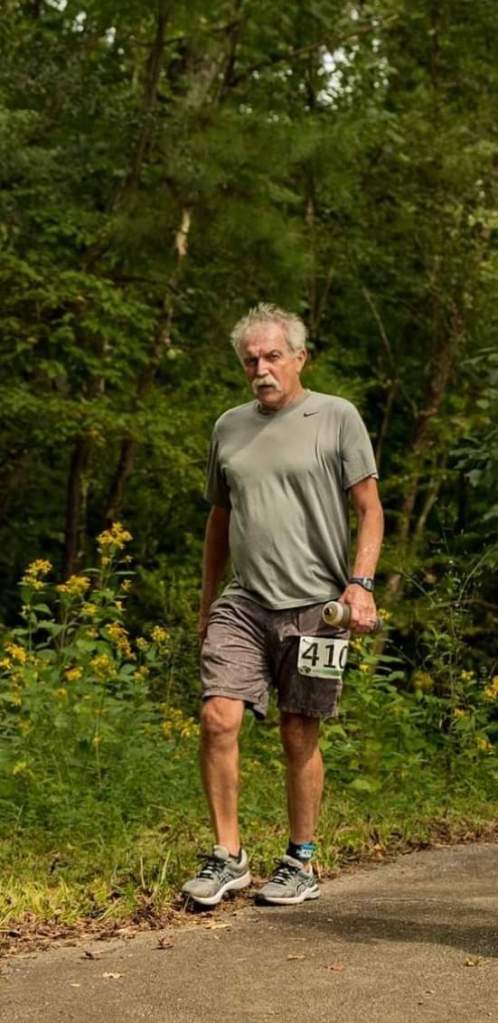
I was robbed! I never had the chance to gracefully age and begin to embrace my golden years. Despite living a lifestyle full of fitness, exercise and healthy eating habits, I have been besieged with a scrum of health concerns: high blood pressure, hyperthyroidism, atrial fibrillation, an aortic aneurysm, low HDL and pre-diabetes. I studied these conditions, learned, adapted and moved forward. With each new diagnosis, I suffered some angst, especially with the findings of an aneurysm but never cried foul, or allowed that it would prevent me from living life robustly.
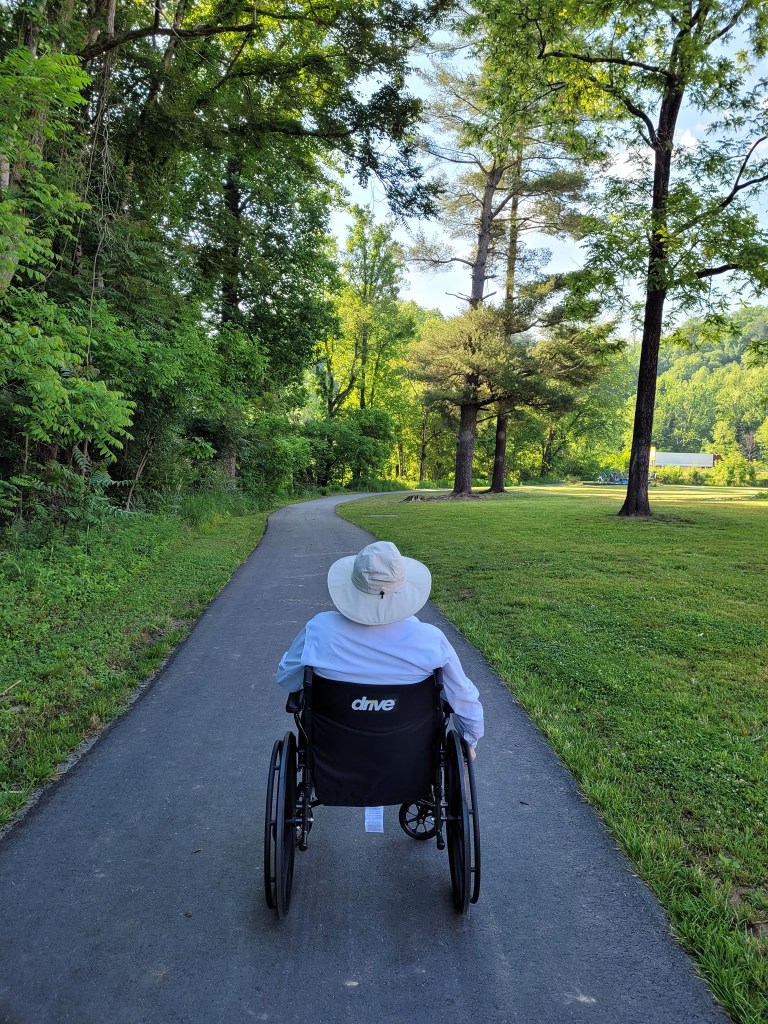
As I battled these conditions, albeit not processing going gently into the night, I lost the right to reflect. The incidents preceding my loss of rights go something like this. During a conversation with a friend, the topic became a 24 hour ultra-marathon, and the discussion evolved into, “I’ll do it if you do it.” Weeks of training ensued with my logging up to 60 miles a week. In September, I found myself running laps around an abandoned golf course for a total of 42 miles. In October, I began experiencing symptoms of a yet unknown condition. After an exhausting number of doctor visits, probing, and examining the search for answers came to fruition in February 2022 with a diagnosis of dermatomyositis (DM) . The condition worsened to the point where I was unable to stand unaided and required outside caregivers when my wife left the house. I digressed from hiking poles, to crutches, to a walker and finally to a wheelchair.
A year later, I have surrendered the toilet adapter and all means of aided transport, except for my hiking poles which I use on uneven terrain. I am left with a numb leg, a weak knee and the inability to do the lift needed to run, but I am able to walk double digits in miles, although these miles take up a greater part of my day. I have relearned how to ride a bike. In addition to losing most use of my large muscles, my coordination and balance are having to be slowly regained. Having fallen several times during the height of this disease slowed this recovery.
I was able to find some help in my recovery, but this disease affects less than ten people out of a million, so much is unknown. As a runner, I knew to listen to my body, what aches and pains to run through and what discomforts I knew called for some type of hiatus. While the DM is always with me, I feel like I can see the light at the end of the tunnel. It’s a long damn tunnel and I don’t expect to fully escape the darkness , but I am thankful for the recovery.
Unable to reflect on aging gracefully as the result of having such a chance stolen from me, I now search for some meaning in my journey and the many things that I have missed. I have arrived at this place with an unwanted companion and I am finally awakening to an awareness of where I am and beginning to understand what opportunities are again opening to me.
Reading an essay written by Barry Lopez, which he called “Deterioration”, I realized I wasn’t granted the opportunity to reflect on my own aging. Lopez is a writer best known for books on natural history and the environment and shares my passion in these areas. My fitness level and dedication to healthy living prior to the onset of my dermatomyositis made me younger than my years, but the disease created a rapid aging that was far from gradual. I had little time to form an opinion or prepare for what the aging process would look like for me. Lopez looks to the past and no longer has the ability to do those things he has always done-lacking the ability and endurance he once had. His downward spiral was more gradual. With my condition rapidly deteriorating, we had to educate ourselves and adapt quickly, no time to reflect on the joyfulness of aging.
I have often used the word stolen to highlight that there was something missing. Having reached the age of seventy, in my life it never before occurred to me when bad things transpired, that something was stolen from me. Even at my lowest point health wise, I always believed deliverance was on the way. I never thought, “why did this happen to me?” and I never believed I wouldn’t pull out of the hole I found myself in just a few years back. There was no temptation to despair, no disaffection. Reading Lopez’s essay led to my thoughts of being robbed of my chance to choose how I had once perceived aging gracefully.
I must own up to the tears that often flowed after a day long infusion, of being pumped full of bits of plasma from thousands of other giving humans. I don’t know the source of this release. Unable to travel sitting, these tears flowed silently while I laid in the backseat with the window shaded, protected from the sun, poisonous to someone with this aberrant condition in which I found myself traveling.
Perhaps it was the indignity of being unable to make my way to a bathroom on the road, having to piss into a urinal, as people, as normal as we make each other to be, buzzed by, unaware of the bizarre scene taking place a few feet across the centerline. I soon graduated to opening the door on the side of the road pissing in the open air leaning against the car seat. But the tears continued to flow, probably for a multitude of reasons evolving into a liberating, full shoulder tremor before it was over. Was it being liberated from the infusion’s tubing, all the new medication or the disease itself that caused this flood of tears?
While Lopez ponders on how he has to adapt to fifty years of splitting and hauling wood to heat his and his friend’s home, mine is a different story. Where he is able to point to the new care he takes in the process lacking the agility and nimbleness to avoid a rogue log, I have to learn how to adapt to new bathroom procedures. Lopez considers what makes him tired and having to call it quits earlier in the day and his surprise at the extra mile or hour he can call on to walk further or split a few logs. I celebrate each ability I recover, each climb I can make, each piece of clothing I can put on by myself. I no longer know this body and it takes continued trial and error and adapting as I move toward the light at the end of the tunnel.
Lopez is no longer with us, but I imagine as he hit seventy, watching the sun fall over his piece of paradise in the mountains surrounding his home, words ran rapidly through his head as he tried to make sense of it all. He or someone titled his last book of essays, Embrace Fearlessly the Burning World (He wasn’t happy with the condition he was leaving the world).
I’m also not happy with how the world is turning now, but it’s not my purpose to tackle that here. Instead of looking backwards, what I’m missing here is the ability to figure out how to move forward. I reflect on reflecting, but it gets me nowhere. I am driven to move and those porch sitting moments with conversation and wine have to wait. The reflection is just tangled up as I try to prove to myself that I am capable. I’m determined to get things done, to improve my lot and to challenge myself. It’s tangled up in the disease, the drugs treating the disease, and aging. There is no separating aging from my condition allowing me to reflect on the “dying of the light.”
-
Subscribe
Subscribed
Already have a WordPress.com account? Log in now.
 Musings of an Old Guy with an Unwanted Companion in a 140 Year Old House